
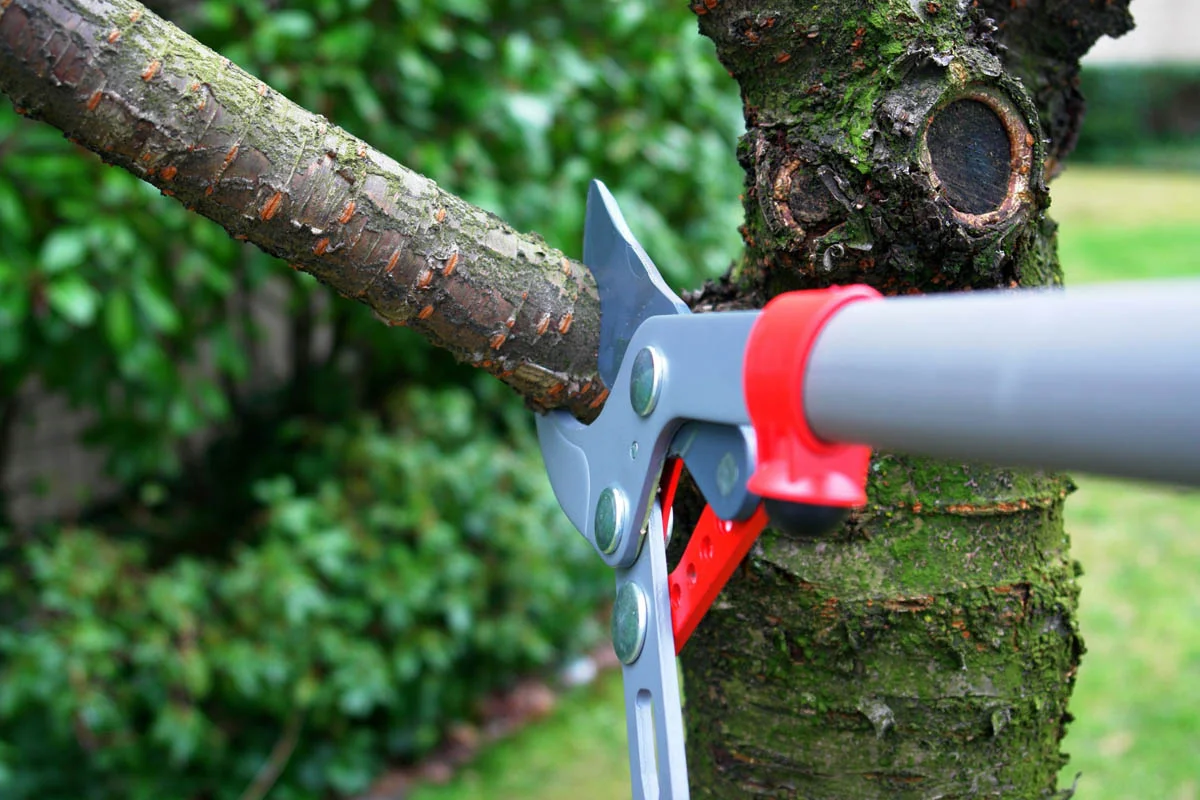
Because yeah, you can cut a branch any day of the year. But if you want the tree to bounce back cleanly, avoid disease, not trigger a sudden explosion of weak growth, and maybe even get better flowers or fruit. Timing matters. A lot. And in Sydney, timing is its own thing because our winters are mild, summers can be brutal, humidity comes and goes, and some pests basically treat the city like a long term rental.
So this is a practical guide. Not the textbook version. More like, when should you prune, for what reason, and which trees are fussy about it.
Also, quick note. If you are dealing with big limbs, anything near powerlines, or a tree that could drop a branch onto a roof or a person, call a qualified arborist. Pruning is one of those jobs that looks calm right up until the moment it isn’t. For homeowners wanting to understand safe pruning practices, tree health management, and when professional intervention is necessary, learn more here about expert tree pruning services designed to reduce risks and maintain healthy, well-structured trees.
The Sydney seasons, in plain terms
Before species, it helps to anchor the year:
- Late winter to early spring (July to September): the classic pruning window for many trees. Less active pests, less sap flow for some species, easier to see structure when deciduous trees are bare.
- Mid to late spring (September to November): good for light shaping, but heavy cuts can push soft growth right before summer stress.
- Summer (December to February): you can prune, but mostly small corrective cuts. Heat plus big cuts can equal sunburn on exposed limbs and a stressed tree.
- Autumn (March to May): often underrated. Great for selective pruning after summer growth, but disease risk can rise if it’s wet.
- Early winter (June): still fine for many structural jobs, especially when the tree is slowing down.
And this is where tree pruning in Sydney becomes a bit of a balancing act. You are not just thinking about “best month”. You are thinking about what the tree is about to do next.
Pick the goal first, then pick the timing
Most homeowners prune for one of these reasons:
1) Safety and risk reduction
If a limb is cracked, hanging, or likely to fail, you prune it when you need to. Safety beats perfect timing. Ideally, follow up later with a proper structural prune in the best season. Get more guide to manage the risks of tree work.
2) Structure and long term shape
This is the classic “make it a better tree” pruning. You remove crossing branches, reduce codominant stems, and build a strong scaffold. Usually best in late winter.
3) Clearance from roofs, gutters, driveways, paths
This is common tree pruning in Sydney, especially with fast growers leaning over tiles and gutters. You can do this most of the year, but aim for cooler months if you are removing a lot.
4) Flowering and fruiting performance
Timing depends heavily on whether the tree flowers on old wood or new growth. Prune at the wrong time and you can literally cut off the season.
5) Controlling size
This is where people get into trouble. Topping and harsh lopping can lead to weak regrowth and long term risk. If size control is the goal, ask for reduction pruning done properly, and often staged over time.
Best time of year by species (Sydney focused)
Below are the common trees Sydneysiders actually have. Street trees, backyard staples, the ones that drop stuff into pools and arguments into family group chats.
Jacaranda (Jacaranda mimosifolia)
Best time
Late winter (July to August)
Goal based tips
- For structure and clearance, late winter is ideal before spring growth starts.
- Avoid heavy pruning in spring if you want that purple show. You can reduce flowering if you cut too much at the wrong time.
What to avoid
Topping. Jacarandas respond with lots of thin upright shoots that break later.
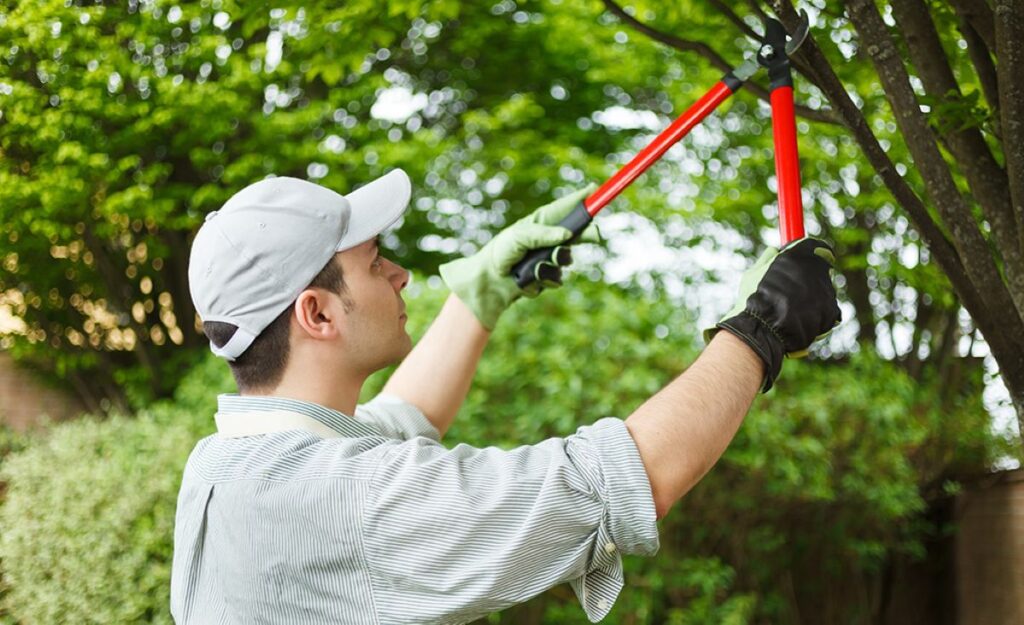
Crepe Myrtle (Lagerstroemia)
- Best time: Late winter (July to August)
- Why: Flowers on new growth, so winter pruning sets up strong summer blooms.
- Style: Light thinning and shaping works. You do not need to commit the famous crepe murder. In Sydney it’s still common, and it still looks rough.
Citrus (lemons, limes, oranges)
- Best time: Late winter to early spring, or after fruiting in warmer areas
- Sydney tip: If you prune right before a cold snap, new growth can be more sensitive. In most Sydney suburbs it’s fine, just avoid pruning immediately before a forecasted cold week.
- Goal: Improve airflow and light. Reduce pest pressure. Keep fruit reachable.
Mango
- Best time: After harvest, late summer into early autumn
- Why: Encourages new flush before flowering cycle. In Sydney, mangoes can be a bit marginal depending on your microclimate, so you want to avoid stressing them in winter.
- Goal: Manage size early. Little cuts are better than big ones later.
Avocado
- Best time: Late winter to spring for light pruning, or after harvest depending on variety
- Sydney caution: Avoid big cuts in high humidity periods. Avocados can be touchy with sun exposure, so don’t suddenly strip shading branches and leave limbs to burn.
Camphor Laurel (Cinnamomum camphora)
- Best time: Late winter to early spring for major works
- Reality check: This is often a removal conversation, not a pruning one, depending on location and size.
- If pruning: Keep it strategic. Cutting hard can trigger vigorous regrowth.
Lilly Pilly (Syzygium spp.)
- Best time: Late winter through spring, then light trims in summer if needed
- Goal: Hedging and screening. They handle pruning well.
- Sydney pests: Watch for psyllid. Good airflow helps, so don’t shear so densely that the interior stays damp and still.
Bottlebrush (Callistemon / Melaleuca)
- Best time: After flowering (often late spring to early summer)
- Why: You avoid cutting off the next display.
- Good approach: Tip prune and shape, don’t gut it. These can become woody if neglected, then people overcorrect.
Native gums (Eucalyptus species)
- Best time: Generally late winter, but depends on species and situation
- Important: Many eucalypts don’t respond well to heavy pruning. They can drop limbs, and large cuts can invite decay.
- Goal: If you’re pruning a gum for safety, get proper arborist advice. This is a major part of responsible tree pruning in Sydney, because eucalypts are involved in a lot of branch failure incidents.
Fig trees (including edible figs and ornamental figs)
- Best time: Winter for deciduous edible figs, late winter for many ornamental figs
- Why: Easier to see structure, and the tree is less reactive.
- Sydney caution: Some figs are relentless. Roots, regrowth, the whole deal. Prune consistently and early rather than trying to “fix” it with one harsh cut.
Olive
- Best time: Late winter to early spring
- Goal: Open vase shape, improve light penetration.
- Avoid: Heavy pruning right before prolonged wet conditions. You want cuts to dry and seal.
Stone fruit (peach, nectarine, plum)
- Best time: After harvest in summer for many varieties, or late winter for structure depending on disease pressure
- Sydney disease angle: Peaches and nectarines can be sensitive to fungal issues. In humid or wet pockets, pruning in drier weather and keeping airflow high matters more than picking the “perfect” month.
Deciduous shade trees (plane tree, liquidambar, ornamental pear)
- Best time: Winter
- Why: Dormant season, clear structure, less mess, less stress.
- Bonus: Cleaner cuts, and you can reduce rubbing and crossing branches before spring load hits.
And yes, for most of the above, the common thread is winter. That is why so many arborists load up the calendar around July and August. Tree pruning in Sydney gets very seasonal once you start doing it properly.
The “worst” time to prune (and what that actually means)
There isn’t one universal worst month, but there are predictable problems:
- Heatwaves: Big canopy reductions can expose inner limbs to sunburn. Trees can also struggle to close wounds when stressed.
- Wet, humid stretches: Higher risk of fungal issues entering through fresh cuts, especially for some ornamentals and fruit trees.
- Right before flowering: If the whole point is flowers, don’t cut off the buds. Sounds obvious, but it happens constantly.
Sometimes, the worst time is simply when you’re tempted to overdo it. Sydney backyards are small, neighbours are close, and people get impatient. That’s how bad pruning happens. Click here to learn more about hedge trimming service costs in Sydney and the factors that affect your quote.
How hard should you prune? A simple rule that saves trees
If you only remember one thing, make it this:
- Prefer smaller cuts, more often, over one massive hack.
Massive cuts create massive reactions. Lots of fast, weak regrowth. Higher decay risk. More chance the tree becomes hazardous later. So when people ask about tree pruning in Sydney for “size control”, the honest answer is usually staged reduction, selective thinning, and realistic expectations.
Also, avoid flush cuts. Don’t leave long stubs either. Cut to the branch collar. That’s the sweet spot for healing.
What about council rules and protected trees?
Sydney is a patchwork. Different councils, different rules, different exemptions. Some trees are protected by size, species, or location. And there can be serious penalties for illegal pruning or removal.
If you’re unsure, look up your local council’s tree preservation order or speak to a consulting arborist. Especially before major works. This is part of doing tree pruning in Sydney without stepping into a mess you didn’t expect.
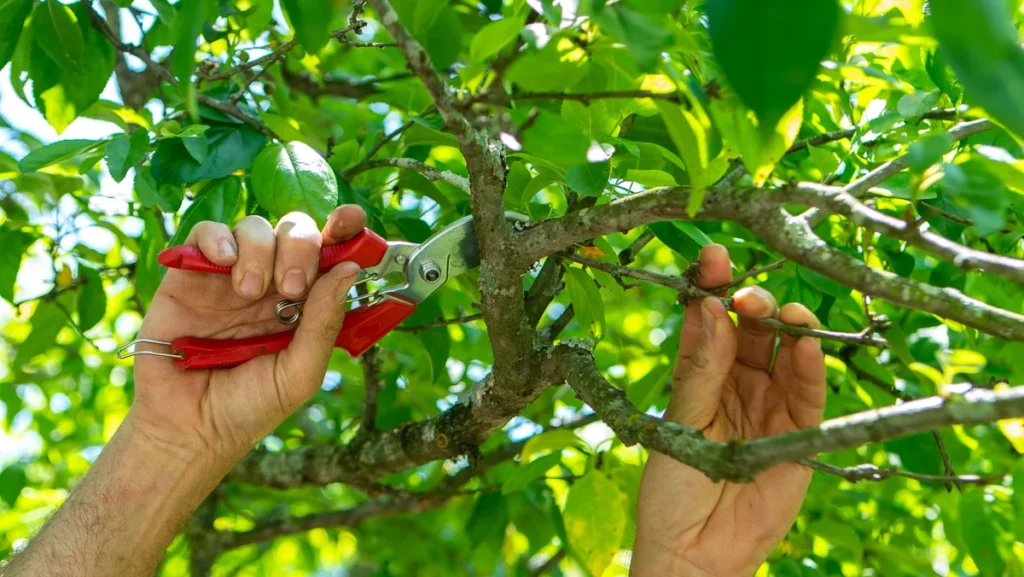
Quick cheat sheet: best pruning windows by goal
Structural pruning (young trees)
- Best: Late winter to early spring
- Why: Sets shape before rapid growth, reduces future failures.
Clearance from roof and gutters
- Best: Late winter, or autumn if you’re removing post summer growth
- Avoid: Big cuts right before peak summer heat.
Reduce limb weight (risk management)
- Best: Late winter, but safety issues get handled immediately
- Note: Use reduction cuts, not topping.
Improve fruit yield and access
- Best: Usually after harvest or late winter depending on species
- Extra: Keep airflow high, remove deadwood, thin crowded areas.
Improve flowering
Best timing depends on bloom season:
- Spring flowering trees often get pruned after flowering
- Summer flowering shrubs often get pruned in late winter
And this is why blanket advice can be useless. Tree pruning in Sydney is not one rule. It’s species plus goal plus weather, all at once.
A few signs you should stop and call an arborist
- Large dead branches in the upper canopy
- Cracks in major limbs or the trunk
- Mushrooms or fungal growth at the base
- A tree leaning more each year, especially after storms
- Branches over roofs, play areas, or powerlines
- You need a ladder and you’re already guessing
Pruning is a safety job as much as it is a gardening job. In Sydney storms are not rare, and trees fail in predictable ways when they’ve been cut badly for years.
Wrapping it up
If you want the simplest “best time” answer, it’s this: late winter is the prime window for a lot of trees here.
But the real answer is more specific. Choose your goal, then prune at the time that supports that goal, for that species. And keep the cuts clean, reasonable, and not driven by impatience.
Do that, and tree pruning in Sydney becomes one of those quiet home maintenance things that pays you back for years. Better shade, fewer broken branches, healthier growth, less mess. And honestly, fewer stressful surprises when the next big storm rolls through.