
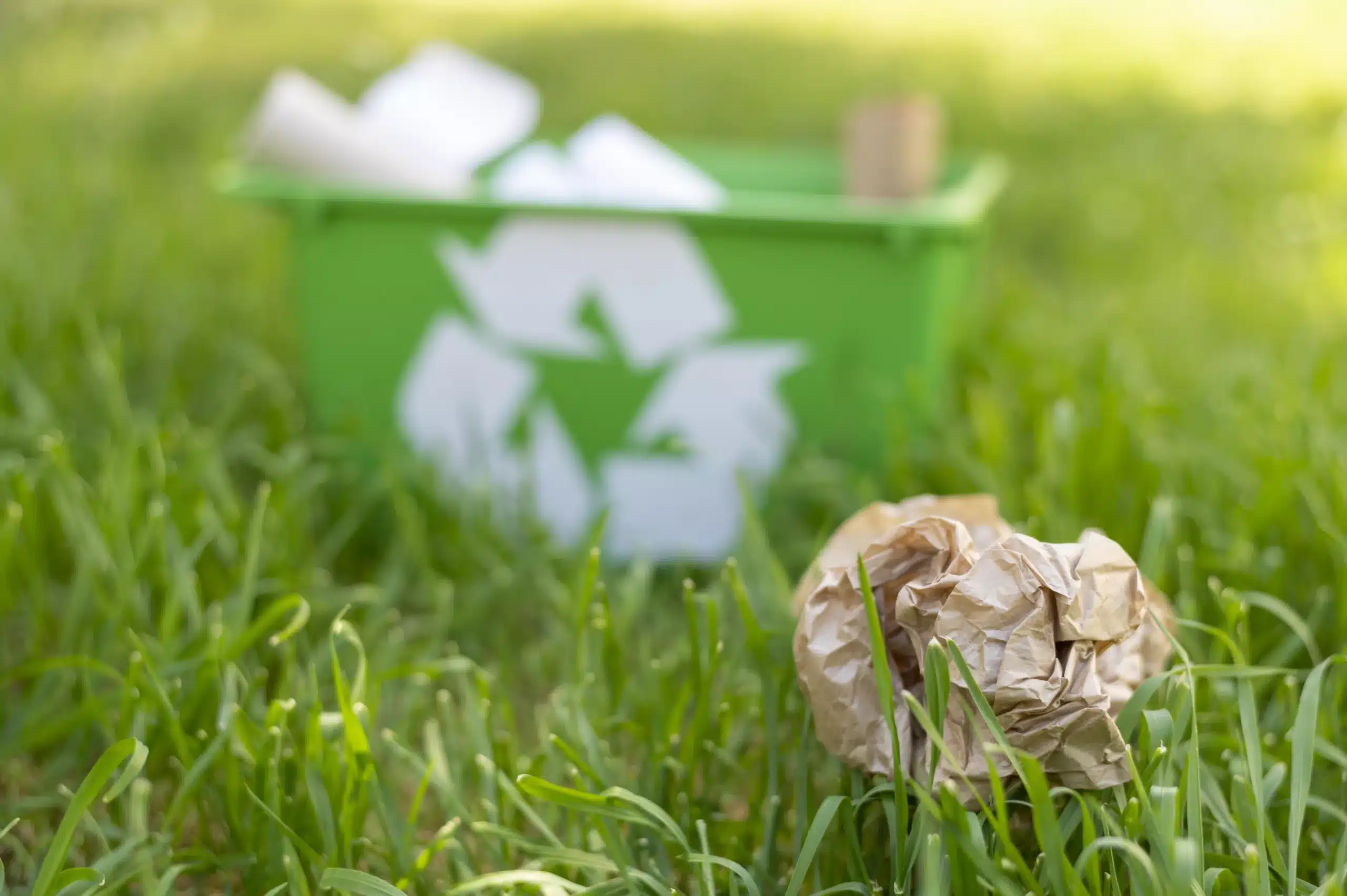
A single mature tree removal generates more organic material than a household bin will absorb in a year. Add hedge work, storm clean-up and a garden renovation and the volume problem becomes a logistics problem. Green waste is also one of the few waste streams where the responsible option is genuinely cheaper than the lazy one, because the material has value as mulch and compost rather than being a disposal cost.
This guide covers what counts as green waste, the four routes off your property, what each costs in Sydney, the regulatory framework, and how to structure a contract so disposal is not an ugly surprise line item.
What counts as green waste
Branches, prunings and logs; leaves, grass clippings and hedge trimmings; weeds and spent annuals; bark and wood chip; palm fronds; and storm-fallen material. What is excluded matters more: treated or painted timber, construction waste, soil and rock, pots, plastic ties, and pet waste. Contamination is the main reason a load gets rejected at a processing facility or charged at a higher rate, so keep streams separate from the start.
Route one: council collection
Most Sydney councils run a fortnightly or weekly kerbside organics service plus periodic bulky Green Waste Removal collections, and many operate a drop-off facility. This is comfortably the cheapest option for ordinary garden volumes since it is bundled into rates. The limits are size and volume: branch diameter and length caps apply, bins have weight limits, and a tree removal will overwhelm the service instantly. Check your own council’s rules, for example City of Sydney, Inner West, Northern Beaches or Central Coast. General service information for New South Wales residents is available through Service NSW.
Route two: bundled into the tree service
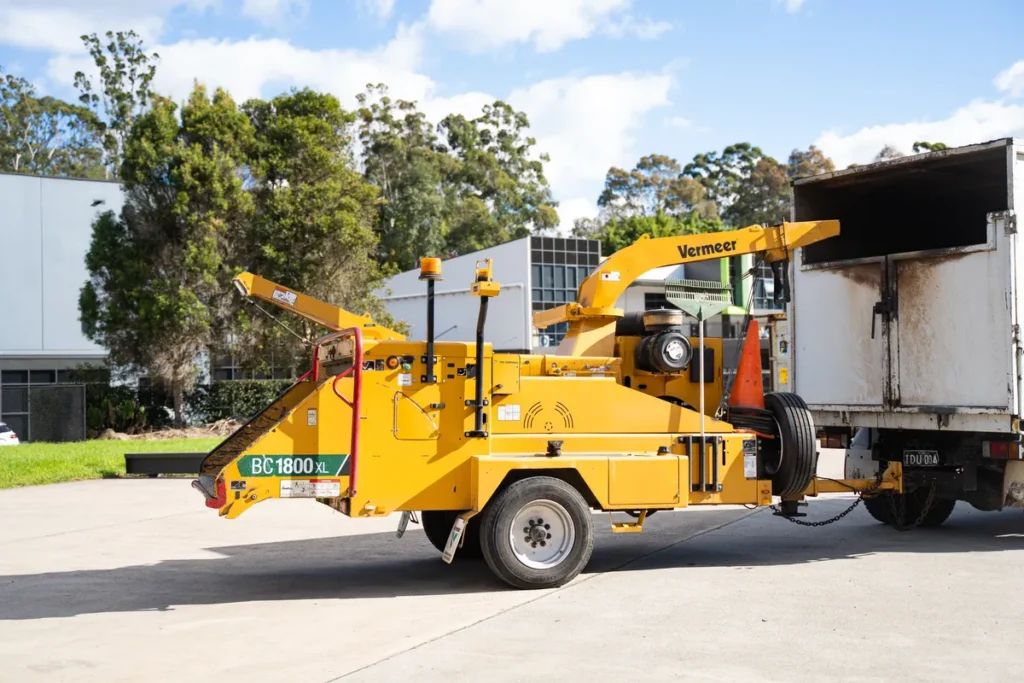
For any tree work, the sensible default is that the contractor takes the material. They are chipping on site anyway, they have the truck, and the marginal cost is far lower than a separate booking. The catch is that “rubbish removed” means different things to different operators. Get the quote to state explicitly whether logs and rounds are included or only chip, whether the stump grindings go, and whether raking and blowing down of hard surfaces is part of the price. Typical bundled disposal for a domestic removal adds $150 to $500 depending on volume.
Route three: a dedicated green waste service
Skip bins, tipper trucks and man-and-truck operators handle garden renovations, deceased estates and pre-sale clean-ups. Costs generally run $150 to $500 for a small load and $500 to $1,200 for larger volumes, with premiums for hand-loading, difficult access and mixed loads. Ask which facility receives the material. A licensed organics processor is a different proposition to a hole in a paddock, and the difference is your liability if the material is dumped.
Route four: keep it on site
The cheapest disposal is no disposal. Chip stays as mulch, larger rounds become garden edging or habitat piles, and soft green material composts. Leaving canopy chip on site typically saves the disposal component of the quote entirely and returns organic matter and moisture retention to your soil. It is also the option that most reliably improves the garden rather than merely tidying it.
The regulatory framework
Waste in New South Wales is regulated by the NSW Environment Protection Authority, which licenses facilities, sets the waste levy that drives most disposal pricing, and administers resource recovery orders and exemptions that govern how recovered organics can be reused. Illegal dumping is an EPA and council enforcement priority with substantial penalties, and the person who generated the waste is not always insulated from consequences. National policy context, including organics diversion and emissions from landfilled organic material, sits with the Department of Climate Change, Energy, the Environment and Water. Broader environmental programs in this state are published by NSW Environment.
Why diversion matters
Organic material buried in landfill decomposes anaerobically and releases methane, a far more potent greenhouse gas than carbon dioxide over short timeframes. Processed aerobically instead, the same material becomes compost and mulch that reduces irrigation demand, suppresses weeds and rebuilds soil carbon. That is the entire logic behind kerbside organics services and the waste levy, and it is why a load of chip is worth more spread on your garden beds than tipped into a hole.
Reducing volume at the source
Prune properly on a regular cycle rather than heavily and occasionally; correct pruning produces less material and far less regrowth to cut again. Mulch grass clippings back into the lawn rather than catching them. Choose replacement species scaled to the space so you are not fighting the tree for thirty years. Chip on site whenever access allows. Guidance on species selection for Australian conditions is published by the Australian National Botanic Gardens, and NSW DPI covers weed material that should never be composted or moved off site.
Getting the contract right
Specify volume or a defined scope, name the receiving facility, state whether logs are included, confirm access and parking arrangements, and require the site to be raked and blown clean. Ask for a tip docket on completion for larger loads. Book outside the post-storm rush if you can, since that is when both prices and delays peak. Green waste is not complicated, but it is the line item most often left vague, and vague line items are the ones that grow.