
The tree goes, the crew leaves, and you are left with a metre-wide disc of hardwood in the middle of the lawn. Stumps are not merely ugly. They are a trip hazard, a mower killer, a nursery for termites and fungi, an obstacle to paving or planting, and in many species a launchpad for suckers that will keep returning for years. This guide covers the removal methods, what each realistically costs in Sydney, the buried-services problem nobody mentions in the quote, and what to do with the site afterwards.
Worth knowing up front: stump work is usually cheaper bundled into the original removal than booked separately later, because mobilising the machine is a meaningful share of the price.
What stump grinding involves
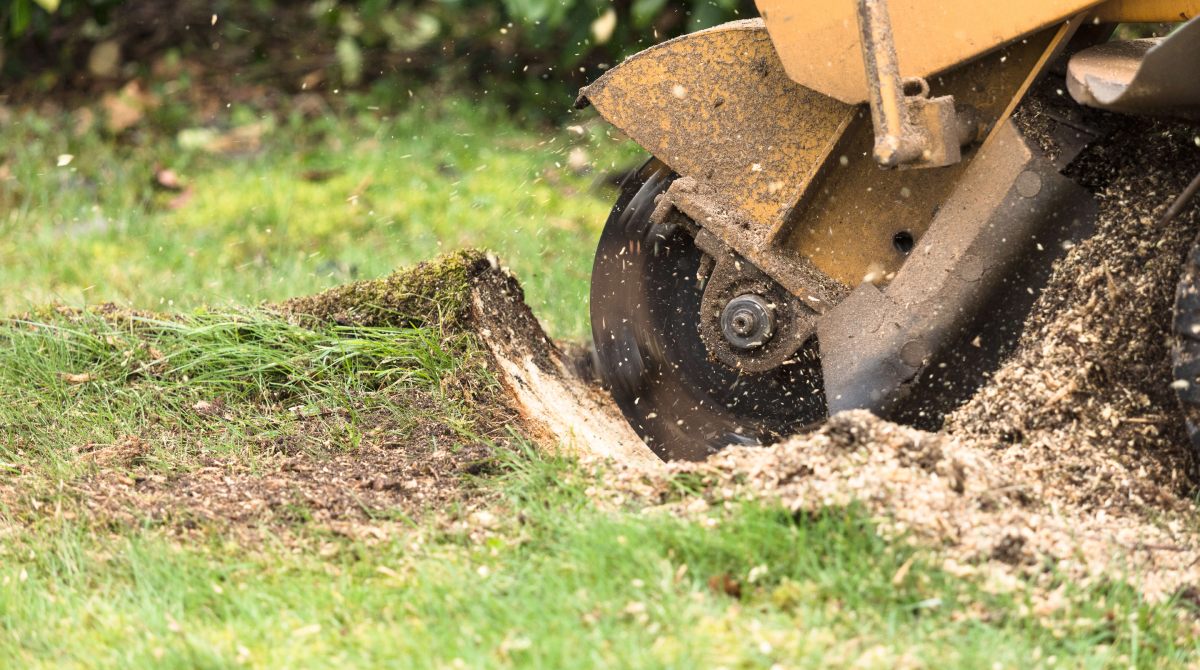
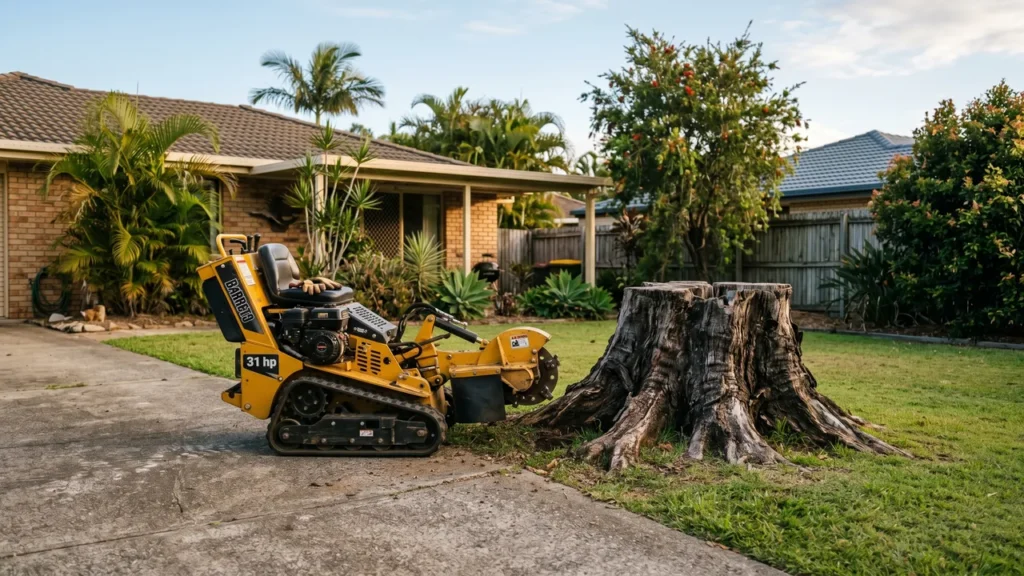
A grinder drives a rotating cutting wheel fitted with carbide teeth across the tree stump grinding in passes, reducing wood to chip. Machines range from narrow walk-behind units that fit through a 750 millimetre gate to tracked or towed machines for large trunks. A standard job takes the stump 200 to 300 millimetres below finished grade and follows the major buttress roots outward, which is what actually stops regrowth and lets you turf or plant over the area. Anything shallower is cosmetic.
The methods compared
Grinding
Fast, contained, and the default choice for residential Sydney. Typically $250 to $600 for a small stump and $600 to $1,500 or more for large or awkward ones. Leaves usable chip and a shallow depression to backfill.
Chemical treatment
A herbicide applied to a fresh cut kills the root system so it cannot resprout, but the stump remains and decays over years. Cheap, slow, and no help at all if you need to build, pave or plant on the spot. Useful mainly for vigorous suckering species where regrowth, not the timber, is the problem.
Excavation
A machine digs the stump and major roots out entirely. Genuinely necessary before slabs, footings, pools and retaining structures, and the only method that gives you clean soil to the required depth. Expect $800 to $2,500 and significant site disruption, plus spoil to remove.
Manual removal
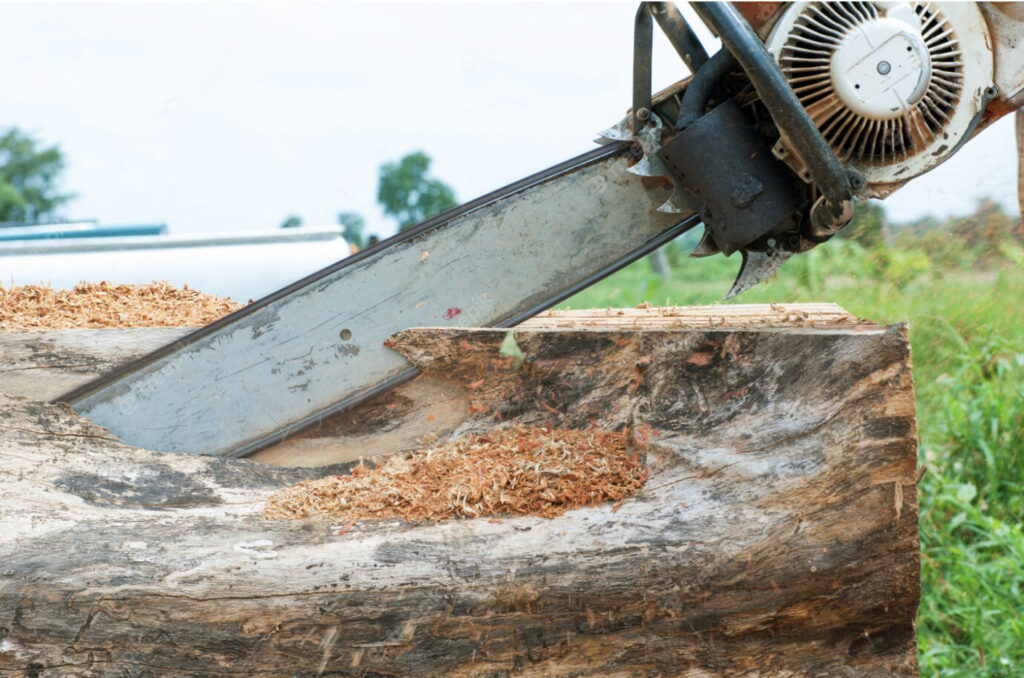
Viable for stumps under about 150 millimetres. Beyond that it is a weekend of digging, a hired saw near soil, and a high chance of hitting something buried.
Buried services: the part that goes wrong
Roots follow the same trenches as water, sewer, gas, electricity and telecommunications, because trench backfill is loose and moist. Grinding into a service is expensive and occasionally dangerous. Locate underground assets before the machine starts, and treat any unmarked area near a boundary, meter or inspection point as suspect. Duties around excavation and contact with buried and overhead services are set out by SafeWork NSW, and a professional operator will raise this before you do.
What drives the price
Diameter at the widest point, not the height of the tree that was there. Depth required, which is greater if you intend to build or plant. Access, since a machine that must be carried through a house or craned into a courtyard costs more than one that drives in. Soil condition, because compacted clay and embedded rock wear teeth quickly. Root spread, which on figs and camphor laurels can extend metres. Number of stumps, since multiples on one visit are much cheaper each. Finally, whether chip stays or goes.
Permits and protected trees
Grinding a stump left from a lawfully removed tree generally needs no separate consent. However, if the tree is still alive, if it was removed without approval, or if the stump belongs to a protected or heritage-listed specimen, different rules apply. Check your council’s tree controls and the state framework in SEPP (Biodiversity and Conservation) 2021. Councils such as the City of Sydney publish the applicable process clearly. Where roots extend into a neighbouring property, the Trees (Disputes Between Neighbours) Act 2006 is relevant and disputes are heard by NCAT.
What happens to the grindings
Grinding produces a mound of chip mixed with soil, typically two to three times the visible stump volume. It works well as mulch on paths and around established shrubs, though it is nitrogen-hungry as it breaks down so keep it away from seedlings and vegetable beds. Where it leaves site, lawful handling of organic waste is governed by the NSW Environment Protection Authority, whose waste framework is the reason a reputable contractor can tell you exactly where the material goes.
Preventing regrowth
Species differ sharply. Many eucalypts and most conifers will not resprout from a properly ground stump. Camphor laurel, privet, willow, poplar, ash and rubber tree frequently will, sometimes from roots metres away. Grind deep, remove buttress roots, cut suckers as soon as they appear rather than after they harden, and where the species is known to be persistent, pair grinding with a herbicide treatment on fresh cuts. Guidance on managing invasive woody species is published by NSW DPI.
Restoring the site
Remove excess chip, backfill with clean topsoil rather than the grindings alone, and allow for settlement of 50 to 100 millimetres over the first few months by mounding slightly. If you are turfing, add a nitrogen-rich amendment to offset the decomposing wood left in the profile. If you are planting a replacement tree, offset it a metre or two from the old root plate; the soil there is compromised and the residual wood will host decay organisms for years. For structural work, insist on excavation rather than grinding and have the depth confirmed in writing before the slab is designed.